
TREBLE CAT
Melody CatsMusic
4.312.00 Reviews
- Version
- 3.5
- Installs
- 10.00K
- Age Rating
- Everyone
Screenshots
Our Review of TREBLE CAT
 Analysis by Appyee
Learning to read notes in the treble clef can feel strangely slow at first. I know the notes are supposed to become familiar, yet my eyes still pause on the staff while I try to remember each position. TREBLE CAT turns that small but important skill into a music game, and its focus is refreshingly narrow: it is built around recognizing treble-clef notes quickly rather than trying to teach every part of music theory at once.
After spending time with it, I see the game as a practice tool more than a complete music-learning course. That distinction matters. It can make short bursts of note-reading practice less dull, especially for a beginner who needs repetition, but it will not replace playing an instrument, learning rhythm, understanding key signatures, or working with a teacher. Its value comes from making one basic task easier to repeat.
The game is made by Melody Cats and sits in the music category. It costs $2.49, carries an Everyone age rating, and has reached over 10K installs. Its average rating is 4.3 from around 118 ratings, with roughly 12 written reviews, so there is some user feedback to consider, although not enough to treat the rating as a complete picture of every learner’s experience.
How the note-reading practice feels in everyday use
I find note-reading practice most useful when it fits naturally into the gaps of a normal day, rather than asking for a long, perfectly focused study session. A quick round can help me notice which staff positions still make me hesitate, then I can carry that awareness to the next piece I play. That everyday rhythm also makes it easier to judge whether the game stays comfortable and dependable when practice becomes more frequent.
A focused way to train the treble clef
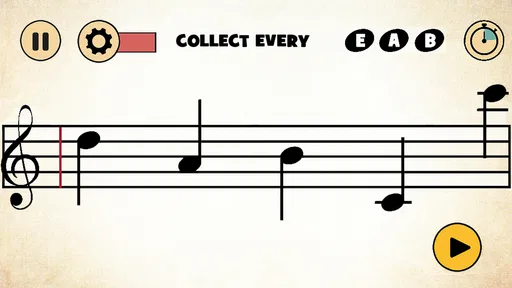
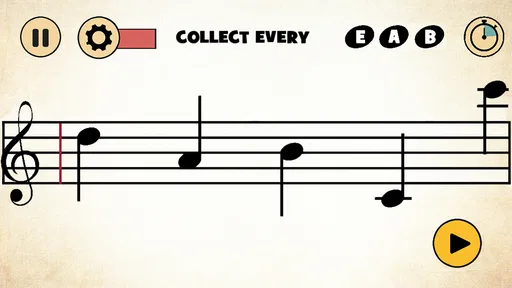
The central idea is simple: notes appear on the treble staff, and I identify them as quickly as I can. That narrow design is the strongest part of the experience. Instead of opening a large theory course and choosing among lessons, exercises, videos, and terminology, I can go straight to the skill that usually causes hesitation when reading beginner sheet music.
That makes it particularly suitable for someone starting piano, keyboard, violin, flute, or another instrument that regularly uses treble clef. It is also useful for a parent looking for a small practice activity for a child who already recognizes the basic staff but still counts lines and spaces one by one. The Everyone rating makes the subject approachable for younger learners, though a child’s enjoyment will naturally depend on whether they like quick game-style repetition.
I would not describe it as a substitute for learning what the treble clef means. A learner still needs an explanation of lines, spaces, note names, and how those notes relate to an instrument. Once that foundation exists, however, repeated identification is exactly where a focused game can help. The difference between knowing a rule and recognizing a note instantly is often built through this kind of practice.
Why speed changes the learning value
At first, many beginners use memory tricks such as “Every Good Boy Deserves Fudge” for the lines and “FACE” for the spaces. Those mnemonics are useful, but they can become a crutch if every note requires a verbal calculation. A game centered on quick recognition encourages a different habit: seeing the position and connecting it directly to the note name.
That is the most important educational benefit I noticed. The goal is not merely to get an answer eventually. It is to reduce the pause between seeing the staff and knowing what is written. This matters when reading a melody, because stopping to decode every note makes even a simple exercise feel disconnected. Short sessions with TREBLE CAT can help bridge the gap between theory and fluent reading.
There is also a practical way to use it without turning practice into a chore. I would open it before playing an instrument and spend a few minutes identifying notes, then move immediately to a beginner piece. The game prepares the visual recognition; the sheet music tests whether that recognition survives in a real musical context. If I used the game alone, I could become comfortable with isolated notes without improving my ability to follow a melody.
A realistic routine for a busy learner
Imagine a student arriving home with only ten minutes before dinner. Practicing a full song may feel like too much, but opening a note-reading game for a short session is manageable. I would use those minutes to warm up my eyes, pay attention to the notes that cause hesitation, and then play a few lines from the current lesson. The small transition is important: it turns the game from a standalone distraction into part of a useful music routine.
For a parent, the same approach can make practice easier to supervise. Instead of asking a child to memorize a page of note names, the parent can let the child complete a brief recognition session and then ask them to find those notes on the instrument. That second step exposes whether the learner is genuinely connecting staff positions to keys or strings, rather than simply tapping through a game by trial and error.
One helpful habit is to speak the note name aloud before playing it. Another is to notice whether the mistake came from confusing two neighboring lines, rushing, or forgetting the note after moving from the game to sheet music. These are small observations, but they make the practice more diagnostic. The app provides repetition; I still have to decide what each mistake means.
Where the game may create pressure
Speed can motivate, but it can also make a beginner tense. A learner who is still building confidence may focus so much on answering quickly that they guess rather than look carefully. If the experience emphasizes rapid responses, I would treat accuracy as the first goal and speed as something that should improve naturally. Fast wrong answers are not useful practice.
This is especially relevant for children or anyone who already feels nervous about music lessons. A game can make repetition friendlier, but a score-oriented mindset can turn each mistake into a judgment. I would keep sessions short, stop before frustration takes over, and return to slower note naming when confusion appears. The app is most helpful when it supports a calm routine rather than becoming another test.
There is a second kind of pressure: the temptation to repeat only the notes that feel easy. Familiar patterns can create a comfortable score without addressing weak areas. To get more from the game, I would deliberately pause after errors and review the relevant line or space away from the screen. That prevents the activity from becoming a reflex exercise with little understanding behind it.
Progress is useful, but it is not the whole picture
A learner may feel improvement because answers become quicker inside the game. That is encouraging, but it should be checked against real music. Can I identify notes in a printed exercise? Can I keep going without restarting whenever the melody moves? Can I connect the note to the correct key or finger position? Those questions measure transfer, and they are more important than a comfortable session inside the app.
I would also avoid treating one strong session as proof that the skill is permanent. Note recognition improves through spaced repetition. A few minutes on several different days is likely more useful than one long burst followed by a week away. The game fits that pattern well because its narrow purpose makes it easy to include in a regular routine, but the discipline still comes from the learner.
Fairness and the cost of practice
The purchase price is $2.49, which makes the decision fairly straightforward for someone who specifically wants a treble-clef recognition game. Since the app is paid, the appeal is different from a free music app that may try to support a broader learning journey. I would judge this purchase by whether I need focused repetition, not by expecting a complete curriculum for the price of a lesson book or teacher.
For a beginner who is already taking lessons, that focused purchase can be reasonable. It adds a convenient way to practice a narrow weakness between lessons. For someone who has not yet decided whether they enjoy learning an instrument, spending money on a specialized tool may be less sensible than starting with introductory material or trying note-reading exercises already included in their learning setup.
The important fairness question is whether the paid format gives the learner a clear, usable practice experience without making progress depend on additional spending. The purchase information establishes the price, but it does not give me a basis to claim anything about extra purchases, advertising, subscriptions, or locked content. I would not assume those details one way or the other. Before buying, I would check the current platform purchase screen and the device-specific listing so the transaction matches my expectations.
That caution does not weaken the value of the game; it simply keeps the decision honest. A low one-time price can still be poor value if the learner needs rhythm, ear training, sight-reading, or instrument guidance instead. Conversely, a narrowly focused tool can be worthwhile when it solves the exact problem that keeps slowing down practice.
How it compares with common alternatives
Compared with flashcards, TREBLE CAT has the advantage of making recognition feel more active. Flashcards are excellent for deliberate review because I can stop and explain why a note has a particular name. The game is better suited to repeated responses and building visual speed. I would use flashcards when a learner keeps confusing the rules, and the app when the rules are understood but recognition remains slow.
Compared with a full music-learning app, this game is much narrower. A larger course may combine note reading with rhythm, ear training, scales, lessons, and instrument exercises. That breadth can be better for a complete beginner who wants a guided path. The trade-off is that a broad app may offer less concentrated repetition of treble-clef notes. TREBLE CAT makes more sense as a supplement or a small specialist tool than as the only music app on a learner’s device.
Compared with a teacher, it is obviously limited. A teacher can hear whether I am counting incorrectly, adjust the difficulty, explain a confusing passage, and connect note reading to technique. The game cannot provide that personal diagnosis. Its role is closer to a practice partner that keeps presenting the same kind of visual challenge, not an instructor who understands why a learner is struggling.
Compared with printed exercises, the game is more convenient for quick sessions and may feel less repetitive emotionally. Printed pages, however, are closer to the way many learners encounter actual music. If I practiced only with isolated notes on a screen, I would miss the challenge of reading notes in sequence, handling skips, and maintaining attention across a staff. The strongest approach is to combine both rather than choosing one permanently.
Device and version considerations
The current version is 3.5, and the minimum operating-system requirement is 10. That makes the compatibility check simple: I would confirm that my Android or iOS device meets that requirement before paying, particularly if I am using an older phone or tablet. A music practice tool is most useful when it opens quickly and is available whenever I have a spare moment, so compatibility matters more than it might for a game I play occasionally.
I would also consider the screen size. Note reading benefits from clear staff lines and comfortable tapping, especially for children or learners with visual strain. A phone can work for a short exercise, but a larger screen may be easier for sustained practice. I would not buy a second device solely for this game, yet I would choose the device on which the notes are easiest to inspect rather than automatically using the smallest screen available.
What I would want to verify before relying on it
The store summary explains the main purpose, but a careful buyer may still want to know how the practice is organized: whether there are adjustable difficulty levels, how mistakes are handled, whether progress is saved, and how much variety appears during repeated sessions. Those details can strongly affect long-term usefulness, especially for a learner who practices daily. I would inspect the current screenshots, description, and purchase screen before making the game the center of a study plan.
I would also check whether the version available on my platform behaves as expected, because an app’s practical feel can depend on the device and operating system. The listed compatibility requirement gives a useful starting point, but it is still sensible to confirm that the interface is comfortable on the particular phone or tablet I plan to use.
These are not reasons to dismiss the game. They are reasons to match expectations to its role. The confirmed information supports seeing it as a paid, specialized game for treble-clef identification. It does not justify treating it as a complete course, a personalized tutor, or a guaranteed solution for every sight-reading problem.
Who should try it, and who should skip it
I would recommend TREBLE CAT to a beginner who already knows that the treble staff contains named notes but needs faster recognition. It is also a sensible companion for a young piano student, a casual adult learner, or an instrumentalist who frequently hesitates over treble-clef passages. The small price and focused purpose make it easy to understand what problem the purchase is meant to solve.
I would be more cautious about recommending it to someone starting from zero in music. If the learner does not yet understand the staff, note names, or how written notes map to an instrument, the game may feel like guessing. In that situation, an introductory lesson or teacher should come first, with this app added later for reinforcement.
I would also skip it if my main goal is rhythm training, ear development, chord knowledge, bass clef reading, or complete sight-reading. Those needs call for different tools or a broader course. The game’s specialization is a strength only when treble-clef recognition is the actual bottleneck.
My trust verdict after weighing the trade-offs
What I like most is the clarity of the purpose. TREBLE CAT does not need to pretend to be an entire conservatory in an app. It targets a common beginner problem and gives that problem a game-shaped practice space. When I use it alongside real sheet music, the concept makes sense: first build quicker visual recognition, then test that skill in an actual melody.
What keeps my recommendation measured is the limited scope. A learner can easily mistake quick answers for complete musical progress, and the game cannot explain every error or replace structured teaching. The paid price is modest, but value still depends on whether treble-clef reading is the specific skill I need to improve. I would not buy it simply because it is labeled as a music game.
My final view is positive for the right audience. TREBLE CAT is best treated as a focused practice companion, not a complete music education system. If I were helping a beginner who repeatedly pauses over treble-clef notes, I would consider it a practical addition to short daily practice, especially when paired with an instrument and printed or digital sheet music. If the learner needs a wider curriculum, personalized feedback, or training beyond note identification, I would choose a broader alternative instead.
In short, the purchase makes sense when its narrow job matches the learner’s immediate need. Melody Cats has built something that can make repetition more approachable, but the real improvement still comes from using the game thoughtfully: prioritize accuracy, review mistakes, connect notes to the instrument, and check progress in real music. Used that way, it earns its place as a small but potentially useful part of a beginner’s routine.
Verdict
Strengths of TREBLE CAT
- Fun, interactive way to practice reading notes and rhythm
- Short lessons make it easy to fit practice into a busy schedule
- Clear visual feedback helps identify mistakes quickly
- Suitable for beginners learning treble clef fundamentals
- Works well as a quick daily warm-up for musicians
Limitations of TREBLE CAT
- Focuses mainly on treble clef, limiting value for advanced players
- Repetition may feel monotonous after extended practice sessions
- Some exercises require basic music-reading knowledge
- Progression can feel slow for users who already read notes well
- May not replace lessons covering technique, theory, or sight-reading
Other Releases by Melody Cats
View All
BASS CAT
Music3.9
Similar Picks in This Category
View All
Tiles Hop Music & Ball Game
AMANOTES PTE. LTD.4.3

Magic Tiles 3™ - Piano Game
AMANOTES PTE. LTD.4.6

Real Piano
Bilkon3.7

Piano Game: Classic Music Song
Dream Tiles Piano Game Studio4.0

Smash Colors: Music Ball Rush
BADSNOWBALL HONGKONG LIMITED4.2

Piano Music Go-EDM Piano Games
Joy Journey Music Games4.5
Frequently Asked Questions
What is Treble Cat, and how does the game work?
Treble Cat is a music-learning game designed to help players recognize notes on the treble clef while playing through interactive challenges. Instead of relying only on traditional exercises, it presents notes in a game-like format that encourages quick identification and repetition. It is aimed mainly at beginners, children, and music students who want to improve basic sight-reading skills in a more engaging way.
Is Treble Cat suitable for complete beginners?
Yes, Treble Cat is generally suitable for beginners who are still learning the notes of the treble clef. The gameplay focuses on recognition rather than requiring advanced music theory or instrumental technique, so users can start with basic knowledge and gradually build confidence. However, younger children may need help understanding the instructions, navigating the app, or connecting the exercises with real sheet music.
Can Treble Cat replace music lessons or a practice teacher?
Treble Cat works best as a supplementary learning tool rather than a complete replacement for lessons with a qualified teacher. It can provide useful repetition and help improve note-reading speed, but it does not offer the same personalized feedback, posture guidance, rhythm instruction, or broader musical development as formal teaching. Students should combine the app with regular instrument practice and structured lessons.
Does Treble Cat require an internet connection or special equipment?
The core note-recognition activities are designed to be simple and accessible, and users typically do not need a musical instrument or additional equipment to begin playing. Depending on the version and device, some features may work without a constant internet connection, while downloads, updates, advertisements, or in-app services can require access. It is worth checking the current store listing for exact offline and device requirements.
Is Treble Cat free to download, and are there advertisements or in-app purchases?
Treble Cat may be available as a free download, but the exact pricing model can vary between Android and iOS and may change with updates. Some versions can include advertising, optional purchases, or paid access to additional content. Before downloading, review the current Google Play or App Store listing carefully, especially if a child will use the app, and check whether purchases require parental approval.
Play our best games!


